
Travel information
Visiting Rwanda
Practical information for guests travelling to Kigali for the Africa Cycling Excellence Awards. Information for the 2026 edition will follow once the host nation is announced.
Rwanda
Rwanda is in East Africa, bordered by Uganda to the north, Tanzania to the east, Burundi to the south and the Democratic Republic of the Congo to the west. It covers 26,338 km² and is one of the most densely populated countries in Africa.
Known as the Land of a Thousand Hills, Rwanda has five volcanoes, 23 lakes and many rivers, some of which feed the source of the Nile. The country lies just south of the equator, in the heart of Africa.
Altitude ranges from about 1,000 m to 4,500 m above sea level. The main lakes are Kivu, Muhazi, Ihema, Burera, Ruhondo and Mugesera. Vegetation ranges from dense equatorial forest in the north-west to tropical savannah in the east. The main national parks are Akagera, Volcanoes and Gishwati-Mukura.
Kigali
Kigali, the capital, lies at the geographical heart of Rwanda, at latitude 1°57′ S and longitude 30°04′ E. The city covers 730 km². Average temperatures over the year range from a low of 16°C to a high of 27°C.
Kigali has three districts: Gasabo (429.3 km²), Kicukiro (166.7 km²) and Nyarugenge (134 km²). According to the fifth Rwanda Population and Housing Census (RPHC5), the city has 1,745,555 inhabitants. The districts are divided into 35 sectors, 161 cells and 1,155 villages, the smallest administrative unit.
The city borders Gicumbi and Rulindo districts (Northern Province), Bugesera and Rwamagana districts (Eastern Province) and Kamonyi district (Southern Province).
Kigali is the most visited part of Rwanda. It has many hotels and tourist sites, a centrally located international airport and major sports venues, including BK Arena, Amahoro Stadium, Kigali Golf Resort & Villas and the Kicukiro Oval cricket stadium.
Over the last 25 years Kigali has become one of the fastest-growing cities in Africa, with annual urban growth of about 4%, and it generates more than 41% of Rwanda’s GDP. This growth, driven by visionary leadership, has helped transform Rwanda from a small-scale agrarian economy into an active player in the regional economy.
Visas
Citizens of every country can obtain a visa on arrival at Kigali International Airport and at all land borders, without applying in advance. Citizens of member states of the African Union, the Commonwealth and La Francophonie receive a free visa on arrival for a stay of 30 days.
Citizens of East African Community member states receive a free pass or entry visa on arrival for a stay of six months. Citizens of the following countries receive a free 90-day visa on arrival: Angola, Benin, Central African Republic, Chad, Côte d’Ivoire, Ghana, Guinea, Haiti, Indonesia, Mauritius, Philippines, Qatar, Saint Kitts and Nevis, São Tomé and Príncipe, Senegal, Seychelles, Sierra Leone and Singapore.
Citizens of all other countries pay USD 50 for a single-entry visa, valid for 30 days, or USD 70 for a multiple-entry visa, valid for 90 days. The fee can be paid online in advance or on arrival, in cash or by card (American Express is not accepted).
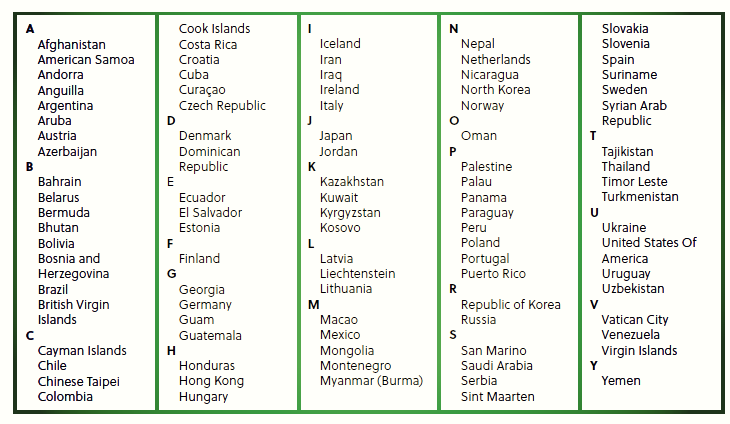
Visa rules can change. Please check the latest requirements with Rwanda’s Directorate General of Immigration and Emigration at migration.gov.rw before you travel.
Security
Rwanda is one of the safest countries in the world: the World Economic Forum ranked it first in Africa and fifth worldwide.
Health
No vaccinations are compulsory for entering Rwanda, except yellow fever for travellers from countries where it is endemic (see below). Make sure your routine vaccinations are up to date, following your doctor’s advice. A valid tetanus vaccination and a small personal first-aid kit are strongly recommended.
Malaria
Most of Rwanda lies too high for malaria to be a major problem, but the parasite can be present, so preventive measures are recommended. Ask a medical professional about anti-malarial medication. Above all, avoid mosquito bites, especially between dusk and dawn.
If you develop symptoms such as high fever, headache, joint and muscle pain, chills, sweating, fatigue, nausea or vomiting, see a doctor immediately. Diagnosis and treatment are available in all health facilities.
Yellow fever
Rwanda is at low risk of yellow fever. Vaccination is required only for travellers coming from countries where yellow fever is endemic (see the World Health Organization website) and must be given at least 10 days before travel. Travellers from these countries who arrive without a vaccination certificate will be vaccinated on entry, at their own cost. Anyone from an endemic country who has no certificate and refuses vaccination or quarantine will be refused entry.
Mpox
Avoid prolonged skin-to-skin contact with anyone showing symptoms of mpox (skin rash, swollen lymph nodes, fever). Wash your hands often with soap and water or use an alcohol-based hand sanitiser, and seek medical attention immediately if you develop symptoms. Mpox vaccines are available after exposure; no preventive vaccination is required.
Marburg virus disease
The Marburg virus disease outbreak in Rwanda was officially declared over on 20 December 2024, 42 days after the last patient tested negative twice, in line with the World Health Organization protocol.
Medical care
Rwanda is a small country, so medical help is rarely far away. Most towns have pharmacies with a limited range of medicines, and larger towns have hospitals. For medical evacuation, Akagera Aviation runs a daytime helicopter ambulance service within Rwanda, with a military paramedic on call. Please make sure you have adequate medical insurance.
General advice
- Do not drink tap water. Bottled mineral water is sold in every town; check that the seal is intact.
- Do not approach stray animals, especially dogs.
- Avoid walking barefoot on wet ground.
- Wash your hands regularly, before and after meals.
Hospitals in Kigali
Rwanda Military Hospital
KK 739 Street, Kanombe, Kicukiro, Kigali
The short numbers are toll-free from a local line.
Currency
The currency is the Rwandan franc (RWF). Exchange rates fluctuate; official rates are published by the National Bank of Rwanda. Bureaux de change are available at the airport and throughout Kigali.
Cash in RWF is best for local services, but credit and debit cards can also be used.
Phones and internet
Rwanda has an excellent mobile network covering almost the whole country, and international calls are easy to make. It is among the top three African countries for internet connectivity, with an ever-growing fibre-optic network.
The mobile operators are MTN and Airtel, both offering mobile internet. SIM and eSIM cards are widely available. By law, every SIM card must be registered before activation; you can register it where you buy it, so please bring your passport.
All hotels and many public places, such as cafés and restaurants, offer internet access.
Plastic-free Rwanda
Please do not bring plastic bags to Rwanda. They have been banned by law since 2008, and any found in your luggage will be confiscated at the airport. Single-use plastics are also banned. Please bring a reusable water bottle.
Emergency numbers
Short numbers are toll-free from a local line.
More information
- Practical information for travellers: visitrwanda.com
- About the city of Kigali: kigalicity.gov.rw